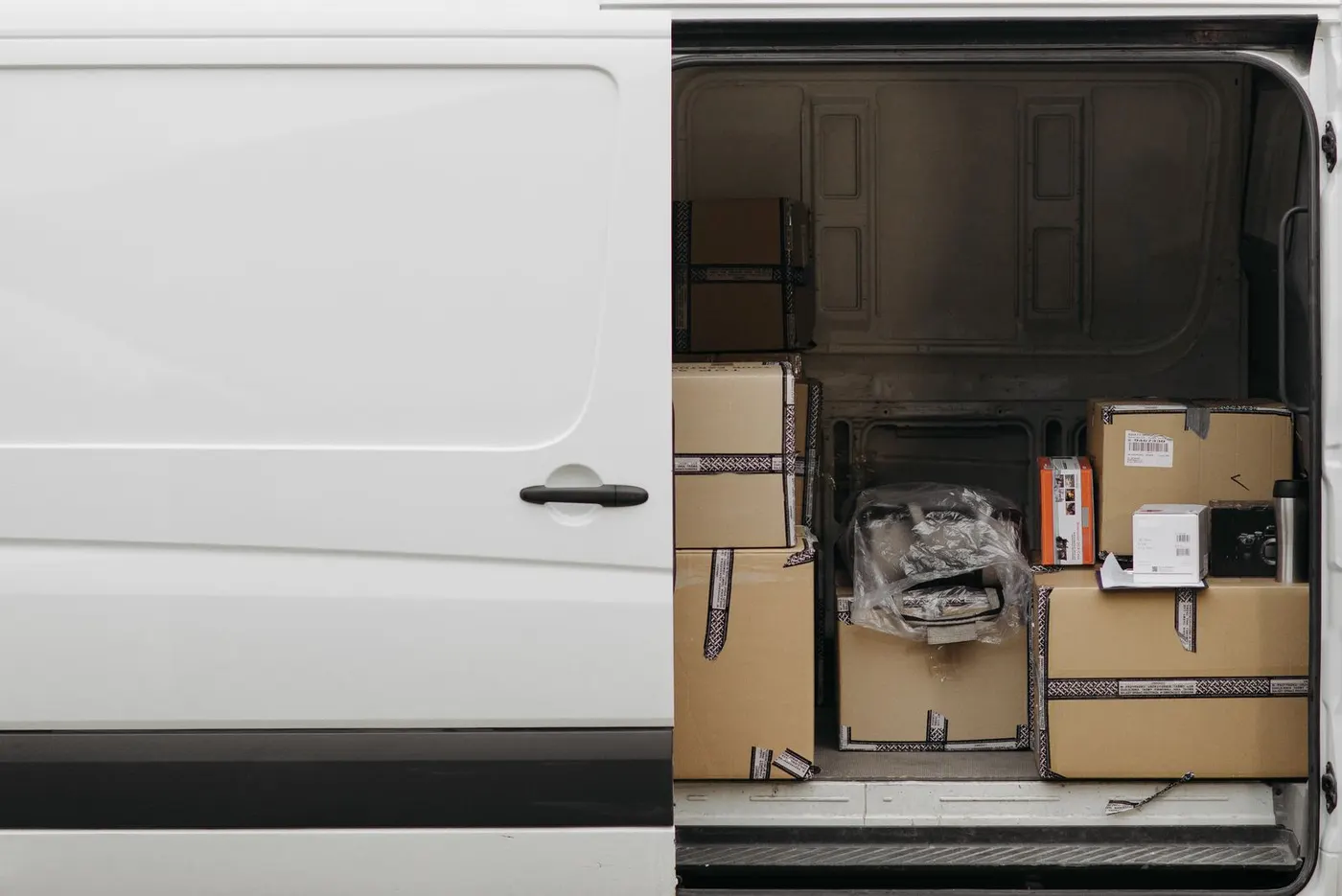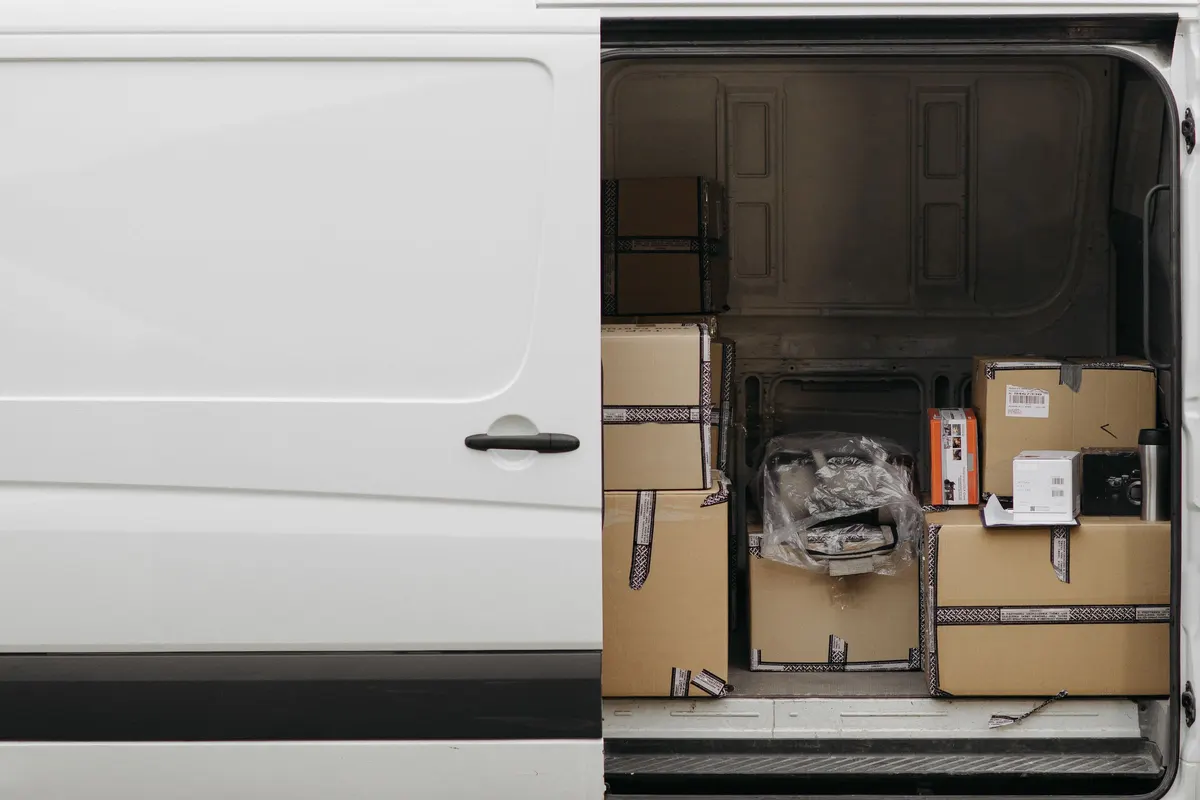
Volume-based pricing charges for the space your load occupies in the vehicle. Weight-based pricing charges for what the load weighs once it is on a scale. For ordinary household clear-outs in Dubai the quote you receive is nearly always volume-based, but the distinction matters, because the same pile of things can produce very different numbers depending on which model it is measured against. This guide covers how each is actually measured, which loads break each one, and how to tell which you are being quoted.
The two models, stated plainly
- Volume: you pay for how much of the vehicle your items fill. The unit is space, and the measurement happens when the load is packed.
- Weight: you pay per unit of mass. The unit is a scale reading, and the measurement happens after the vehicle is loaded.
Everything else follows from that. A volume price rewards a load that packs down; a weight price rewards a load that is bulky and light. Neither is more honest than the other — they suit different material, which is why different parts of the waste industry settled on different ones.
How volume is actually measured
By the space the load takes up once it has been stacked into the vehicle — not by how much floor it covered in your flat. This is the single most useful thing to understand about volume pricing, because the two are rarely the same number.
A room that looks alarming often packs down to less than a quarter of a vehicle once bags are compressed and a wardrobe is taken apart. The reverse also happens: three or four large, rigid items with awkward shapes can occupy a full load while leaving obvious gaps nobody can fill. What is being priced is the space consumed, including the space wasted by shapes that will not sit against each other.
That is also why photographs produce a better quote than an item list. A crew reading a photo is estimating stacked space; a list of nouns tells them nothing about shape.
How weight is actually measured
By weighing the loaded vehicle and subtracting its empty weight, with the difference being what you are charged for. It is a genuinely precise measurement, which is its main advantage — there is no estimating and no argument about how tightly something was packed.
Its disadvantage for household work is that it cannot be quoted in advance with any confidence. Nobody can tell you what a spare room weighs from a photograph, so a weight-based price is usually a rate rather than a figure, and you find out the total afterwards. For most residents that is the wrong trade: a precise number after the fact is less useful than a firm number before the crew is dispatched.
Why household work here is nearly always priced by volume
Because the cost of a household collection tracks space and labour far more closely than it tracks mass. A crew's time is spent carrying, dismantling and stacking, and a vehicle's limit is normally reached when it is full rather than when it is heavy. Furniture, mattresses, appliances, bagged clutter and packing waste are all bulky relative to what they weigh.
Weight-based charging tends to appear where the material is dense and uniform — the kind of load where volume would badly understate what the vehicle is actually carrying. If a quote for a normal household clear-out is expressed as a rate per unit of weight, that is worth asking about rather than assuming it is standard.
The loads that break each model
Every pricing model has material it handles badly. Knowing which side your load falls on tells you where to expect friction.

Bulky and light — expensive on volume, cheap on weight:
- Mattresses, sofas and armchairs, which are mostly air held in shape by a frame.
- Empty cartons, bubble wrap and polystyrene packaging after a move or a large delivery.
- Garden greenery, cushions, bedding and soft furnishings.
- Large plastic items — storage boxes, outdoor furniture, children's play equipment.

Dense and small — cheap on volume, expensive on weight:
- Books, files and paper in quantity, which are far heavier than their size suggests.
- Tiles, offcuts and rubble left over from a small renovation.
- Soil, sand and plant pots that have been standing outside for years.
- Gym weights, safes, marble and granite tops, and solid hardwood pieces.
- Motors, tools and anything else made mostly of metal.
The limit that overrides both models
A vehicle has a legal payload, and it applies whichever way the job is priced. Once that limit is reached the truck stops taking material, even with visible space left in the back.
This is why a dense load can require a second vehicle while looking like half a job, and why an operator may treat a quote differently once soil, tiles or a large quantity of books is mentioned. It is not an upcharge. It is the point at which the vehicle physically cannot take more, and it is the honest reason to declare heavy material when you ask for a price rather than letting it turn up on the day.
Which model suits your load
- Mostly furniture, appliances and bagged household clutter: volume, comfortably. Your load is bulky relative to its mass, and a firm figure in advance is worth more than precision afterwards.
- Mostly dense material in small quantity: volume still tends to work in your favour, provided you declare it so the vehicle sent can carry it.
- Large quantities of dense material: expect weight to enter the conversation one way or another, either as the basis of the price or as a reason a second vehicle is needed.
- A genuinely mixed load: volume, with the heavy items named up front. That is the combination that produces a quote which does not move.
What to ask so the model doesn't change on you
- Which basis the figure is calculated on — space used or weight — in those words.
- If it is volume, which vehicle the quote assumes, since a half load means different things in different vehicles.
- Whether anything in your list would be treated differently, and what happens if it is.
- Whether the figure is a fixed price or an estimate that settles after the job.
- What the price includes beyond the collection itself, so you are comparing like with like across two quotes.
An operator who answers all five without hedging has a defined pricing method. One who cannot say which basis a number came from is quoting a feeling, and a feeling is exactly the kind of number that changes when the crew sees the job.
What this means in practice
For nearly every household clear-out in Dubai you will be quoted on space, so the useful preparation is to make your load pack well and to be honest about the parts of it that are heavy. Break down what comes apart, compress what compresses, and name the books, the tiles and the soil-filled pots before anyone quotes. Do that and the two models stop competing: the price reflects the space you actually used, and nothing on the day forces a recalculation.