A roof terrace is the only outdoor space in a Dubai home that sits above everything else, including the lift. That single fact decides how a rooftop clear-out runs: the items do not travel out through the property, they travel down into it first. This guide covers what a roof job involves here — the three kinds of roof people mean, what usually needs to come off one, and why the last flight of stairs, rather than the size of the pile, sets the pace.
The three kinds of roof people mean
Rooftop means something different depending on the building, and the difference changes who has to be asked before anything moves.
- A villa roof terrace, reached by an internal staircase from the top floor or, in some older properties, only by an external stair. Usually private, and usually the largest of the three.
- A private terrace belonging to an upper apartment or penthouse, which is yours to use but sits on a level the service lift may not serve.
- The shared building roof, where the water tanks, condensers and plant equipment sit. This is the building's space rather than anyone's storage, and clearing it is a management job.
The first two are ordinary household collections with an awkward last leg. The third is a different conversation, and it starts with the building rather than with a crew.
The lift stops one level short
On almost every roof job the final stretch is a staircase. A service lift reaches the top occupied floor, the roof sits above it, and whatever is up there comes down by hand.
That changes the arithmetic of the job. Nothing rolls on a stair, so a sack trolley is dead weight, and two people carrying a folded parasol move in single file with one of them walking backwards. Roof stairs in villas here are often narrower than the main stair, frequently with a tight turn at the top and a door at the head of them that opens the wrong way.
The practical consequence is that a roof clear-out is measured in trips rather than in volume. Twenty light items can take longer than four heavy ones when every trip is a full flight.
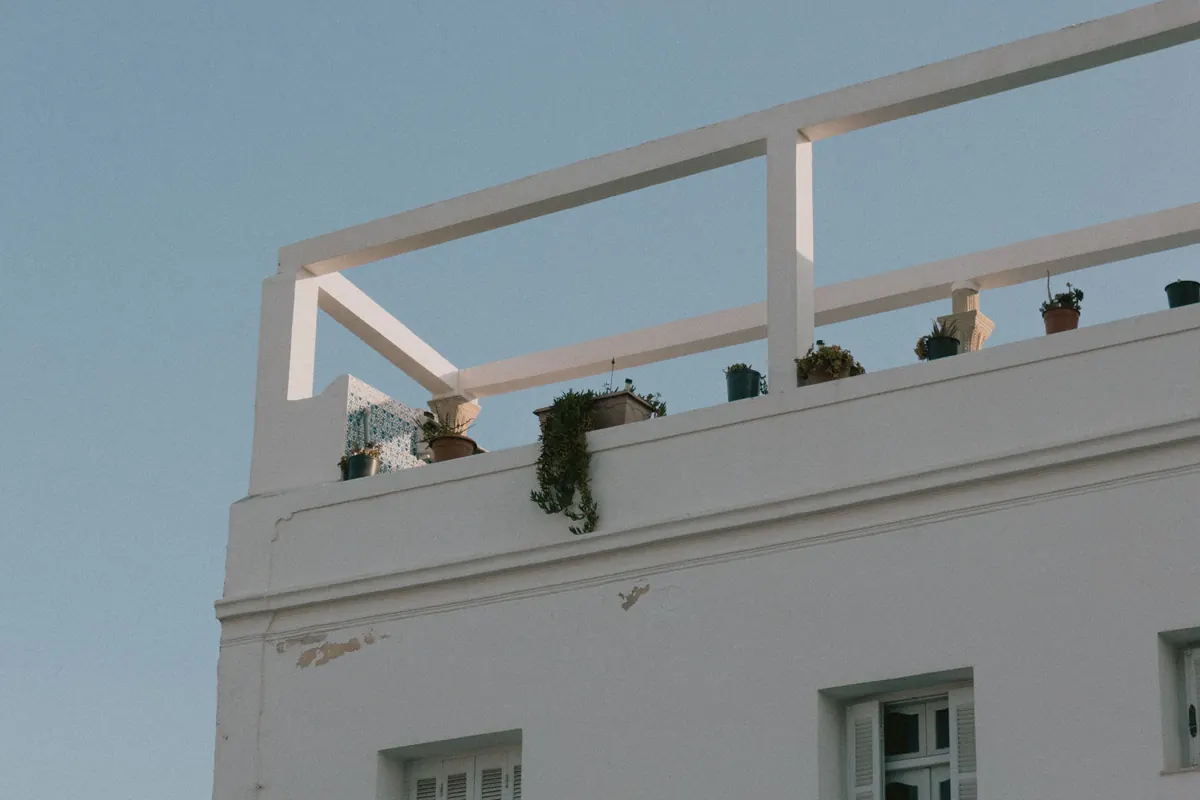
What usually comes off a Dubai roof
Roofs collect a different set of things from balconies, mostly because there is room up there for what would not fit anywhere else.
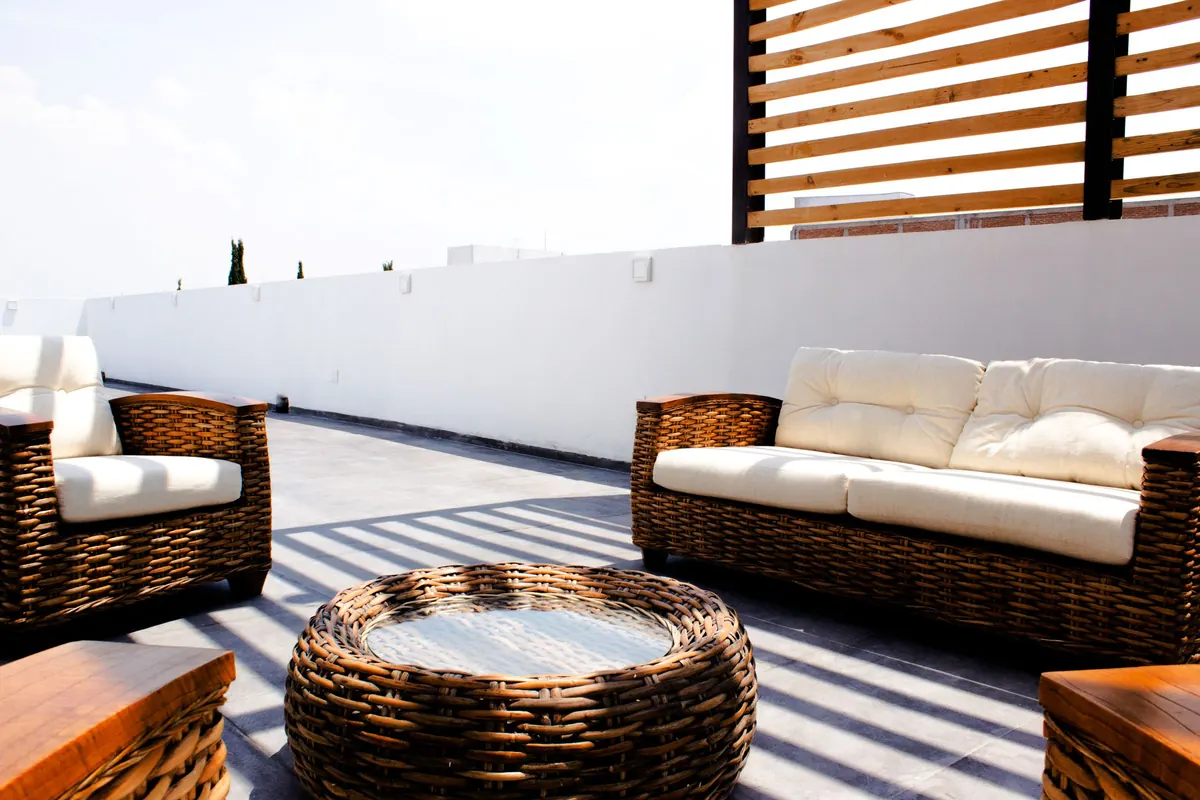
- Outdoor seating and majlis-style cushioned benches, normally the bulkiest single item on the roof.
- A pergola, gazebo frame or shade sail, fixed down and taken apart in sections rather than carried whole.
- Parasols with water-filled or sand-filled bases, which are far heavier than they look and are emptied before they move.
- Artificial grass laid in strips, along with the sand or foam underlay beneath it.
- Planters, part-used sacks of soil, and the plants that did not last a summer.
- Gym equipment and bicycles moved up to free space downstairs.
- Old satellite dishes, loose cabling and the brackets they were bolted to.
- Leftover material from a fit-out — offcut boards, a part-empty tile crate, a bag of grout — put up there and forgotten.
Most of it is bulky rather than heavy. The exceptions are the ballast, the soil and anything with a concrete base, and those are the items that decide how many people the job needs.
Weight, wind and anything bolted down
Two things make roof items harder to shift than their equivalents downstairs: they are usually anchored against wind, and the anchoring is deliberately heavy.
Shade structures are bolted or weighted because wind at roof level is stronger and steadier than it is on a balcony a few floors down. A crew therefore arrives expecting to unfix things — brackets set into a parapet, a base plate under a pergola leg, cable ties holding a sail to a rail — and expecting to break large items down on the roof rather than carry them assembled.
Heat is the other constraint, and it is a real one. An unshaded roof surface is genuinely unworkable through the middle of the day for much of the year, which is why roof jobs are usually booked early in the morning. Agree that timing when you book rather than discovering it on the day.
Nothing goes over the parapet
Items are never dropped, lowered or thrown over the edge of a roof, however tempting the drop looks from up there. Everything comes down the way it went up.
This is worth saying plainly, because it is the first idea most people have when they see a pile of awkward items on a roof and clear ground below. There is no safe improvised way to lower a load past occupied floors, and a crew willing to try is not one to book. If something genuinely cannot come down a stair — a fixed structure, a large tank, a piece of plant equipment — that is specialist lifting work arranged through the building, not a junk removal job.
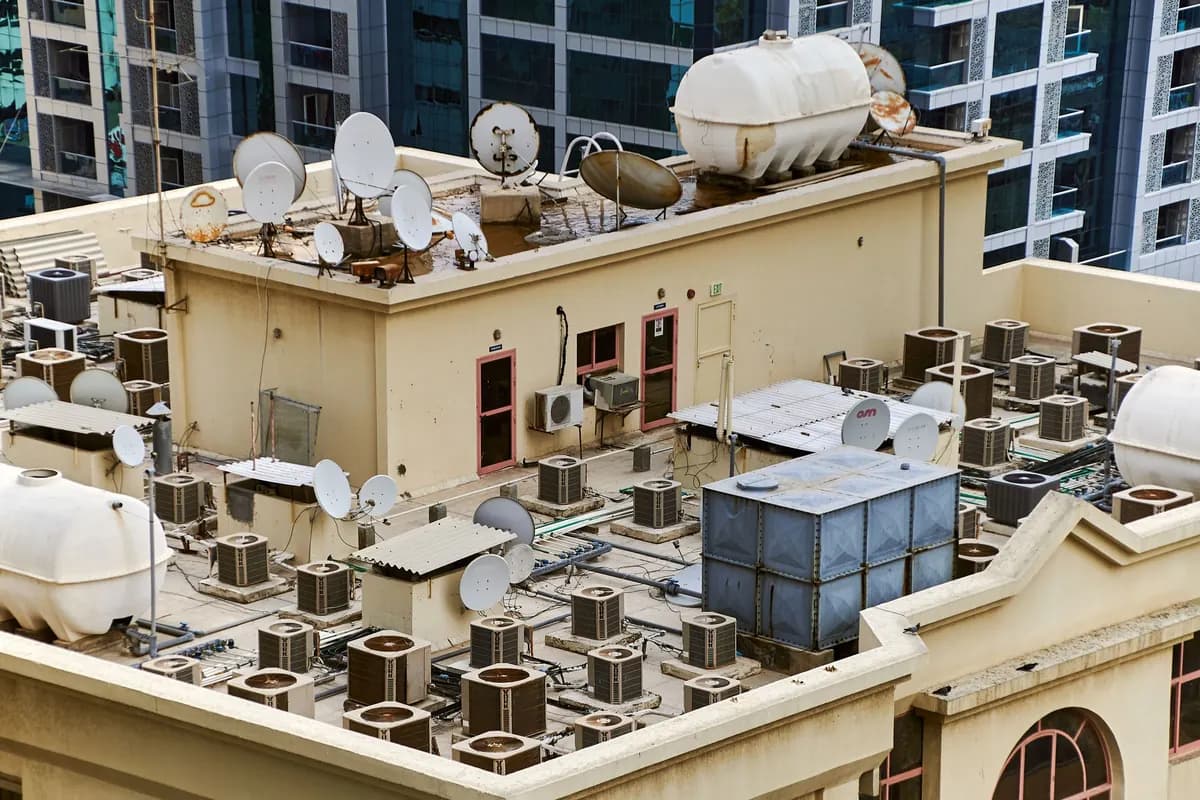
Who has to say yes before a roof is cleared
A private roof terrace attached to your own villa or unit does not usually need anyone else's permission for the collection itself, although the route the crew takes through the building might. A shared roof always needs the building's agreement, without exception.
In a tower there is one extra detail worth settling early: the door at roof level is often locked and controlled by the building rather than by the resident. Ask who holds that key before the day, because a collection that reaches the top floor and stops at a locked stairwell door has achieved nothing at all.
Getting a roof job done in one visit
A roof clear-out is one of the few jobs where a little preparation genuinely shortens the day, because every avoided trip is a full flight of stairs.
- Photograph the roof from both ends and send both images with your enquiry — a roof is the space people describe least accurately.
- Say whether the access is an internal stair, an external stair or a hatch, and roughly how wide it is.
- Empty water-filled bases and pots the day before if you can do it safely, because water and wet soil are pure weight.
- Move anything that is staying into one corner so nobody has to ask twice.
- Mention anything bolted down, so the right tools arrive with the crew rather than after them.
A roof terrace is a good space to own and a slow one to clear, and nearly all of that slowness lives in a single staircase. Describe the access accurately when you ask for a quote, be honest about what is fixed down and what is full of water, and put the visit at the start of the day rather than the middle of it. Everything else about a roof job is ordinary — it is only the last flight that is different.