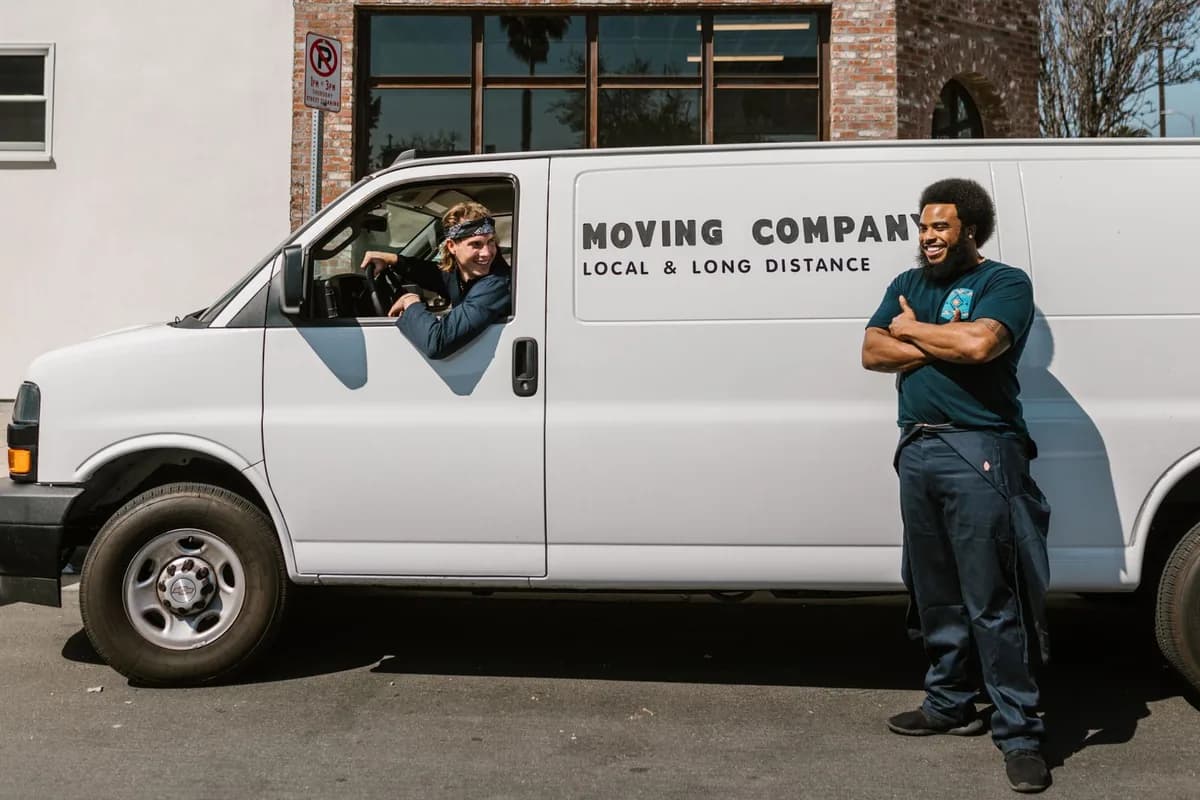
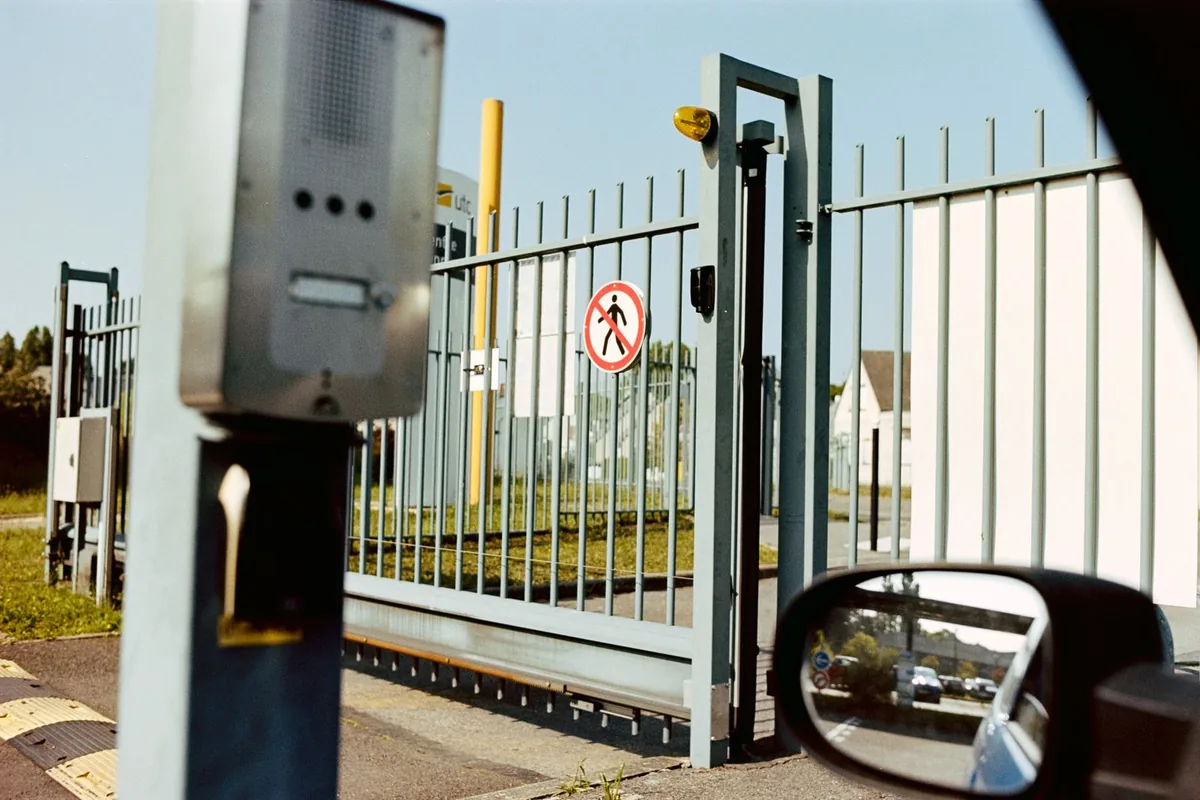
Access is everything between the road and the item, and four things decide it: where the vehicle can legitimately stop, the route on foot from there to your door, the way up or down, and who has to give permission for the shared parts in between. A collection where all four are settled in advance is uneventful. A collection where one of them was never checked is the one that ends with a crew standing at a barrier. This guide covers those requirements and how to sort them out before the day, not what size of vehicle turns up or what fits inside it.
What access actually means on a collection day
Access is not one question, it is four separate checkpoints, and each one can fail on its own. A crew can have a perfect place to park and still be unable to move a wardrobe, or a booked lift and nowhere legal to leave the vehicle.
- Where the vehicle can stand legally and safely while it is being loaded.
- The route on foot between that spot and your front door, and how long it is.
- The vertical move — a lift that takes the item, or a stairwell that does.
- Permission from whoever controls the shared parts of that route.
This is why a company that asks about parking and floor level before quoting is doing the job properly rather than stalling. Those answers change the plan more than the contents of the room do.
Where a removal vehicle can legitimately stop
In a Dubai residential setting there are usually three workable options, and it is worth knowing which one applies to you before the crew is on its way.
- A designated loading bay or drop-off area, which most towers have and many ask you to reserve through building management.
- A marked visitor bay or paid public bay close enough to the entrance to keep the carry sensible.
- The driveway, or the service road immediately outside the gate, for a villa or townhouse.
What does not work is anything that blocks other people: a ramp, a fire lane, a live traffic lane, or a resident's allocated bay used without asking them first. A crew will not load from any of those, and being moved on mid-job costs far more time than finding the right spot at the start.
Basement and podium car parks come with their own limit, since a posted height barrier will stop a box truck at the entrance regardless of what is available inside. If your building has one, the vehicle stays at street level and the load comes up to it.
The gap between the vehicle and the door
The single access detail that changes a job most is the distance between where the vehicle stands and where the items are, because that distance is walked once with every item and once again empty. It is measured in round trips, not in metres.
A bay a few steps from the lift lobby and a bay on the far side of a podium are the same on a map and nothing alike on the day. The second one turns a straightforward tower job into an afternoon, and it is the reason two flats on the same floor of the same building can be quoted differently.
- A loading area on the opposite side of the building from the residential lift core.
- A podium level where the pedestrian route back to the lifts runs the long way round.
- A ramp that vehicles use but pedestrians are not allowed to walk on.
- A villa with a long driveway, or one where the usable exit is a side gate rather than the main door.
- A tower where the loading bay is on a different level from the ground-floor entrance.

Who controls each part of the route
You control less of the route than you would expect. Inside your own front door the decisions are yours; everything past it belongs to somebody else, and the road outside belongs to nobody you can telephone.
- Inside the unit — yours, and the only stretch you can promise a company outright.
- Corridor, lift, lobby, loading bay and car park — building management, which sets the hours and the conditions.
- Community roads and the entry gate — community security, which usually wants the vehicle announced in advance.
- The public road and kerb outside — neither, which is exactly why it cannot be reserved for you.
The practical consequence is that access is something you request rather than something you arrange alone. Reserving a service lift and its timing window is its own process in a tower, and where that sits in the wider booking sequence is worth reading separately. What matters here is that each of those parties needs asking, and none of them is quick at the weekend.
When the vertical move is the constraint
If there is no lift that takes the item, the stairwell becomes the access route and the job is planned around it. This is a real limit rather than an inconvenience: a two-metre wardrobe that will not stand upright in a lift car has to go down the stairs in one piece or come apart first.
Older low-rise buildings, common in areas such as Deira and Al Karama, often have no service lift at all and sometimes no lift above the ground floor. Newer towers usually have one, but it may be under maintenance, already reserved, or restricted to certain hours. Either way it is worth confirming rather than assuming.
- Whether the building has a service lift, and whether bulky items may use the passenger lifts if it does not.
- The internal measurements of the lift car, if a tall or long item is going in it.
- The width of the stairwell and how tight the turns are at each landing.
- Which floor you are on, since the number of flights decides how the crew is sized.
The access details to give when you ask for a quote
Most guidance covers what to ask a removal company. This is the other direction: the seven things a company needs from you before it can give a number that holds. Sending them unprompted takes a minute and removes almost every reason a quote changes later.
- Your floor level, and whether there is a lift that takes bulky items.
- Whether the building has a loading bay or drop-off area, and whether it must be reserved.
- Any height limit posted at the car park entrance.
- Roughly how far the nearest legal stopping point is from your door.
- The time window building management allows for moves and bulky collections.
- Whether the vehicle needs registering at a community gate, and the address as security has it listed.
- Anything awkward on the route — a narrow turn, a stair-only stretch, a gate too tight for a large vehicle.
A quote built on those details is close to the final price. One built on the contents alone is a guess about the easiest possible version of your building.
What happens when access fails on the day
Access problems on the day resolve in one of four ways, and only the last of them is genuinely expensive.
- The carry gets longer, so the job takes more time than it was scoped for.
- The load is moved in a smaller vehicle that can reach where the large one cannot, sometimes across two runs.
- The visit is rescheduled to a slot when the lift, the bay or the approval is actually available.
- The crew cannot start at all, and the trip is wasted for everybody.
None of the first three is a disaster when it is flagged early, because the plan simply changes to match the building. The fourth almost always traces back to a detail that was known in advance and never mentioned.
Access is worth five minutes of checking before a booking rather than five minutes of explaining after one. Find out where the vehicle can stand, how far that is from your door, what the lift will and will not take, and who has to say yes — then pass all four to the company in the same message. That is the whole of it, and it is the difference between a crew that walks in and starts and one that spends the first half hour finding out what your building expects.