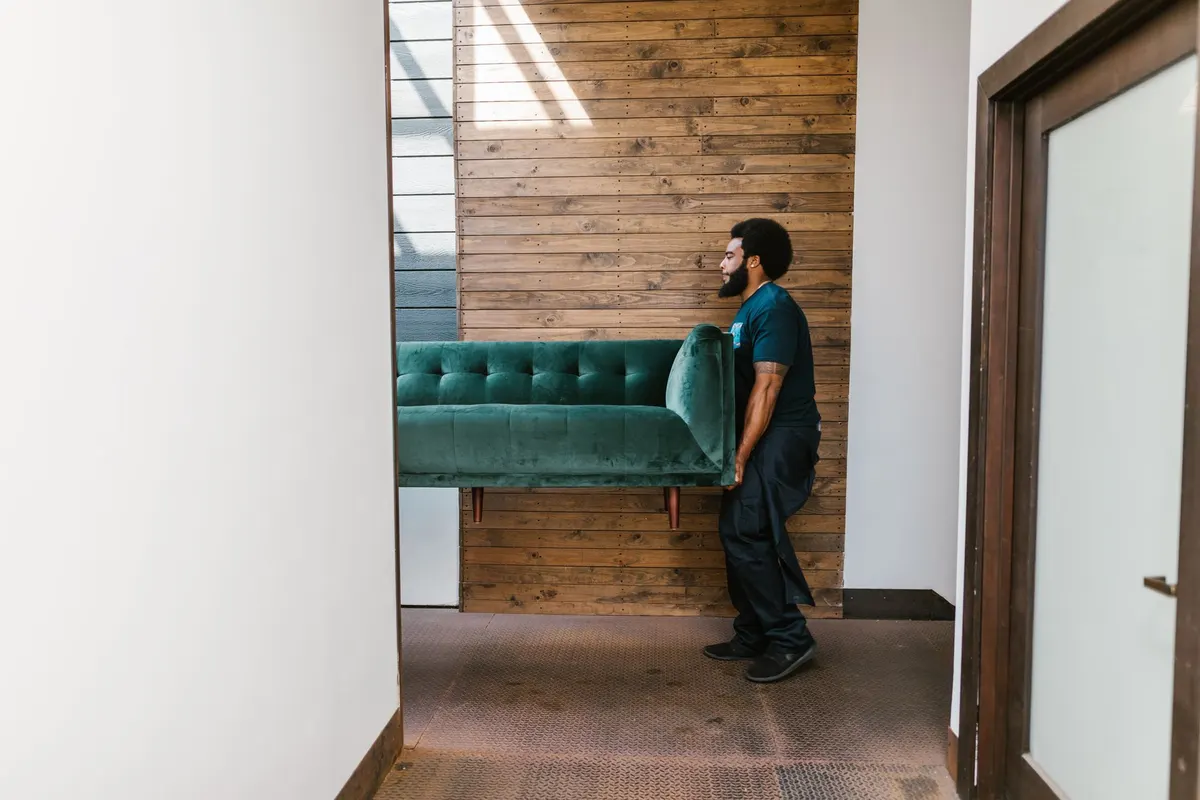
A maid's room is the smallest finished room in a Dubai home, and usually the last one anyone thinks about until it has to be empty. A maid's room clearance in Dubai is a short job with an unusual first step: most of what is in there belonged to a person, so deciding what happens to it comes before deciding what gets thrown out. This guide covers what comes out of the room, how to handle anything left behind, and why a space this small can still take longer than its size suggests.
What counts as a maid's room here
A maid's room is a small self-contained bedroom built into the layout of a home, set apart from the family bedrooms and usually placed near the kitchen, the laundry area or a service corridor. Most have their own shower room. In Dubai they are standard in villas and townhouses, and common in two-bedroom apartments and larger.
The rooms are small by design — often just wide enough for a single bed, a wardrobe and a walkway between them. That matters more than it sounds, because it is why a room holding very little can still be awkward to empty.
Two different rooms answer to the same name. One has been lived in by someone working in the home. The other belongs to a household with no live-in help and has quietly become the store cupboard the apartment never had. This guide is mainly about the first, because it is the version with a decision attached, though the practical parts apply to both.
Why it clears differently from a storeroom
A maid's room clears differently from a storeroom because it was lived in rather than stored in. What comes out is furniture and personal belongings rather than boxes and forgotten equipment, and the whole room has sat inside the cooled part of the home.
That last point changes the condition of everything in it. A mattress kept in an air-conditioned bedroom for three years is in a different state from one kept in a garage or an outdoor store, where heat and humidity work into foam and timber. Things from a maid's room are far more likely to be worth passing on than throwing away.
The harder difference is the one nobody plans for. A storeroom clear-out is a sorting job. This one usually follows a person leaving, and it starts with belongings that are not yours to decide about.
What usually comes out of the room
The contents are consistent enough that a crew can picture the job from a two-line description.
- A single bed and mattress — in most rooms the largest item by some distance.
- A wardrobe, either freestanding or built into the wall.
- A chest of drawers, a bedside table or a small shelf unit.
- Belongings left behind: clothes, bedding, shoes, toiletries, a prayer mat.
- Suitcases and holdalls, often the ones somebody arrived with.
- A small fridge, a kettle, a fan or a portable television.
- A clothes airer, an iron and an ironing board.
- Whatever the household added over the years — a spare suitcase set, a vacuum cleaner, seasonal decorations.
Deciding what happens to what was left
Speak to the person who lived there before anything is bagged. People leave at short notice, and things get left behind that were meant to be collected later — not everything on the floor has been abandoned.
A short message asking what they want kept, forwarded or thrown away settles most of it within a day, and it is far easier than working it out afterwards. Where someone has already left the country, it is still worth asking; the answer is usually that a small number of things matter and the rest can go.
Some items never belong in a disposal pile whatever else is agreed: identity documents, bank cards, medication, phones and chargers, and photographs. Put those into one bag before anything else moves, and keep it out of the room.

Photographing the room as you found it takes a minute and removes any later question about what was there. If nothing is agreed and nobody replies, set a date, keep the personal items aside until it passes, and clear the rest.
Why a small room can take longer than it looks
The volume is small. The working space is smaller, and that is what sets the pace.
- Only one person can work inside the room at a time, so items come out to the corridor first and get sorted there.
- Bed frames are usually assembled where they stand, and a single frame rarely leaves a small room in one piece.
- A built-in wardrobe is fixed to the wall and stays — removing one is a contractor's job, not a collection. A freestanding wardrobe comes apart.
- The route out often runs through the kitchen or a laundry area rather than the hallway, so the carry works around appliances and a floor nobody wants scratched.
- The shower room is a small clear-out of its own, and it is the part most often remembered as the crew is leaving.
In a tower the route ends at the service lift, which the building may want reserved in advance — the same arrangement any apartment collection needs.
What shapes the price
Three things set it, as with any collection: how much space the load takes on the vehicle, what the items are, and how far they travel to reach it. For this room the load is genuinely small — a bed, a wardrobe and a few bags is a fraction of a vehicle rather than a full one.
Two things move it from there. The first is whether the room has been doubling as the household's storage, which changes the volume completely and is worth saying upfront. The second is the floor and the lift, which decide how long the carry takes rather than how much space the load fills. A figure quoted before those two are known is a guess rather than a price.
Clearing it in one visit
- Message the person who lived there and agree what is kept, forwarded or disposed of.
- Put documents, bank cards, medication, phones and photographs into one bag and take it out of the room.
- Photograph the room as it stands, before anything moves.
- Strip the bed and bag the bedding, clothes and soft items — they compress, and they travel better bagged than loose.
- Measure the doorway against the bed frame and the wardrobe, and take apart anything that will not pass.
- Empty the shower room, including the cabinet and whatever is hanging behind the door.
- In an apartment, check whether the service lift needs reserving for the collection.
A maid's room clearance is a small job wrapped around a decision that has nothing to do with disposal. Agree what happens to the belongings first, set aside the things that should never be in a load at all, and what remains is a bed, a wardrobe and a few bags going down in a lift. Handled in that order, the room ends up empty and the shower room cleared, and nothing has been thrown out that somebody was still expecting to see again.