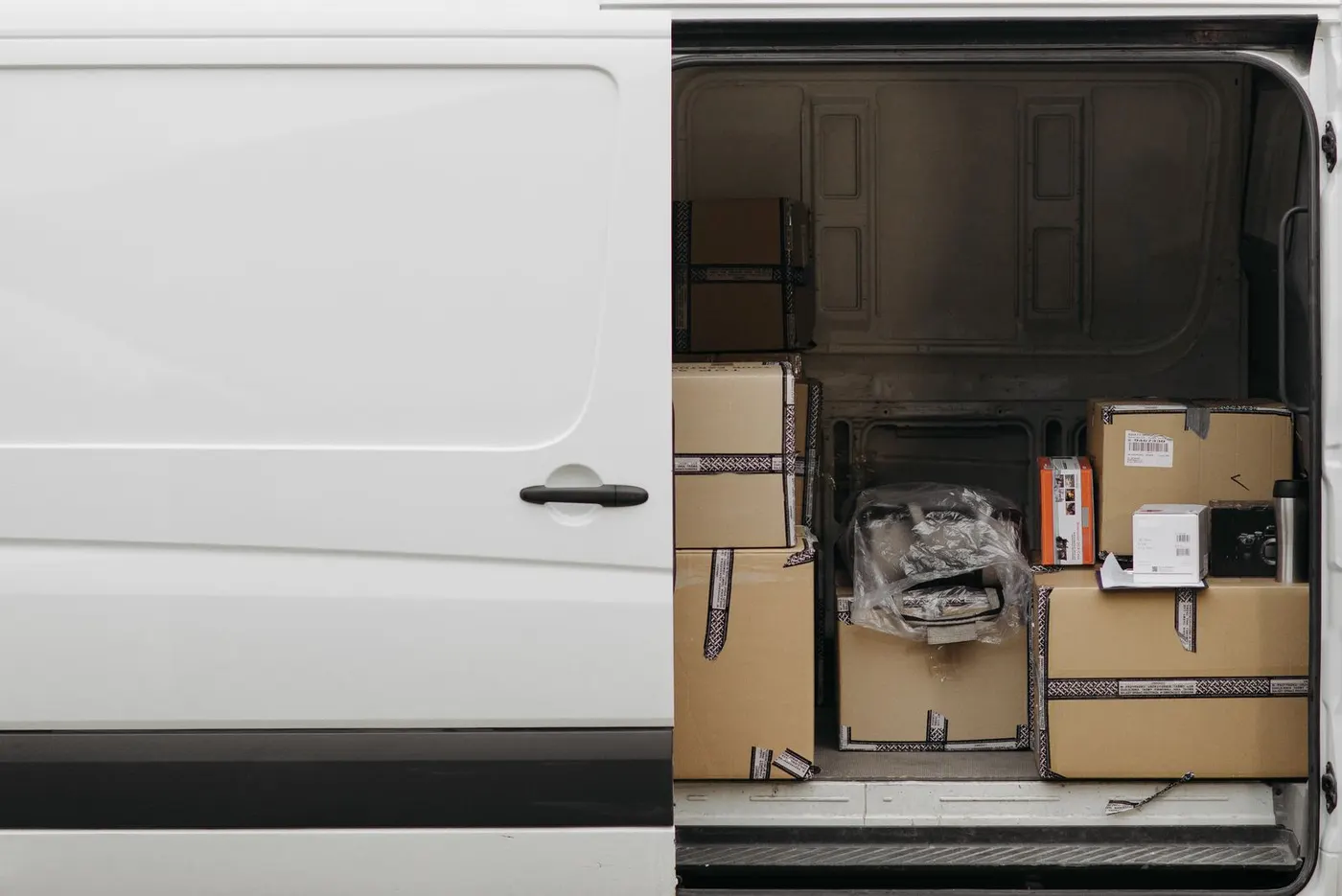
Ask how much a removal truck holds and most answers come back in cubic feet — a number almost nobody can actually picture standing in their own living room. A more useful answer starts from the job itself: how many rooms, how many big pieces, how full a load that adds up to. This guide maps real household jobs to load size, so you have a rough read on your own before you call for a quote.
Why a cubic-foot figure doesn't help much
A published capacity figure describes an empty box, not your specific mix of furniture, boxes and awkward shapes. Two loads with the same volume on paper can look completely different once they are actually stacked — a wardrobe and a mattress waste space around their edges in a way that ten identical boxes never do.
What actually predicts how much space a job takes is the large, rigid items, because everything soft or small fills in around them rather than adding meaningfully to the total. That is why the estimate below works from job type and big-item count rather than a cubic-foot number.
The load-fraction system, quickly explained
Most Dubai junk removal companies price by how much of the truck a job fills — a quarter load, a half load, a full load — rather than a flat per-item rate. The rest of this guide uses those same fractions as the unit, since they are what will actually appear on your quote.
What a load actually looks like, room by room
The list below is a starting point, not a quote. A room with unusually large furniture, or a pile that has been building for years, moves up a category. Used as a rough guide, it holds up well across most household jobs.
- A single room's furniture — one wardrobe, one bed frame, a few boxes: roughly a quarter load.
- A full bedroom or a small storeroom cleared completely: roughly a third to a half load.
- A one-bedroom apartment, fully cleared: typically a half to a full load.
- A two- or three-bedroom apartment, fully cleared: often a full load, sometimes a second trip.
- A small villa clear-out, including a garden or maid's room: usually two loads or more.
- A full villa clear-out, whole property: commonly three or more loads, planned as a multi-visit job.
What pushes a job up a category
- Large single items — a sofa, a fridge, a wardrobe — count for more than their size suggests, because their shape wastes space around them.
- A storeroom or garage that has been filling for years usually runs larger than it looks from the doorway.
- Renovation debris and rubble are dense rather than bulky, and hit a truck's weight limit long before its floor space runs out.
- Anything needing separate handling — an old air-conditioning unit, gas canisters, paint — doesn't count toward the general load but still needs mentioning upfront.

None of this makes a job harder to book. It just means a crew's estimate on the day may land a category higher than a first guess from photos alone, which is normal and not a sign of an inflated quote.
A quick way to estimate your own job
- Count the large rigid items first — wardrobes, beds, sofas, appliances, tables. These decide the category almost by themselves.
- Add a mental quarter load for every room's worth of remaining boxes, bags and smaller furniture.
- Round up if any large item is unusually oversized, or if boxes have been accumulating for more than a year or two.
- Send the count and a few photos with your quote request, since a crew that has that detail arrives with the right vehicle the first time.
When a rough guess is enough, and when it isn't
For a single item or a one-room job, a rough guess is genuinely enough — the difference between a quarter and a third load rarely changes which vehicle turns up. For a full apartment or villa clear-out, it is worth being more deliberate, because the gap between one full load and two changes both the price and how long the day takes.
If you are genuinely unsure, send photos rather than guessing blind. A company used to estimating from photos will tell you plainly if your job looks like more than you think, and that conversation costs nothing before you book.
There is no universal answer to how much a truck holds, because the honest answer depends on what is actually going and how it is shaped, not on a cubic-foot spec sheet. Count the big items, picture the job in rooms rather than in feet, and the load size you land on will be close enough to book with confidence.