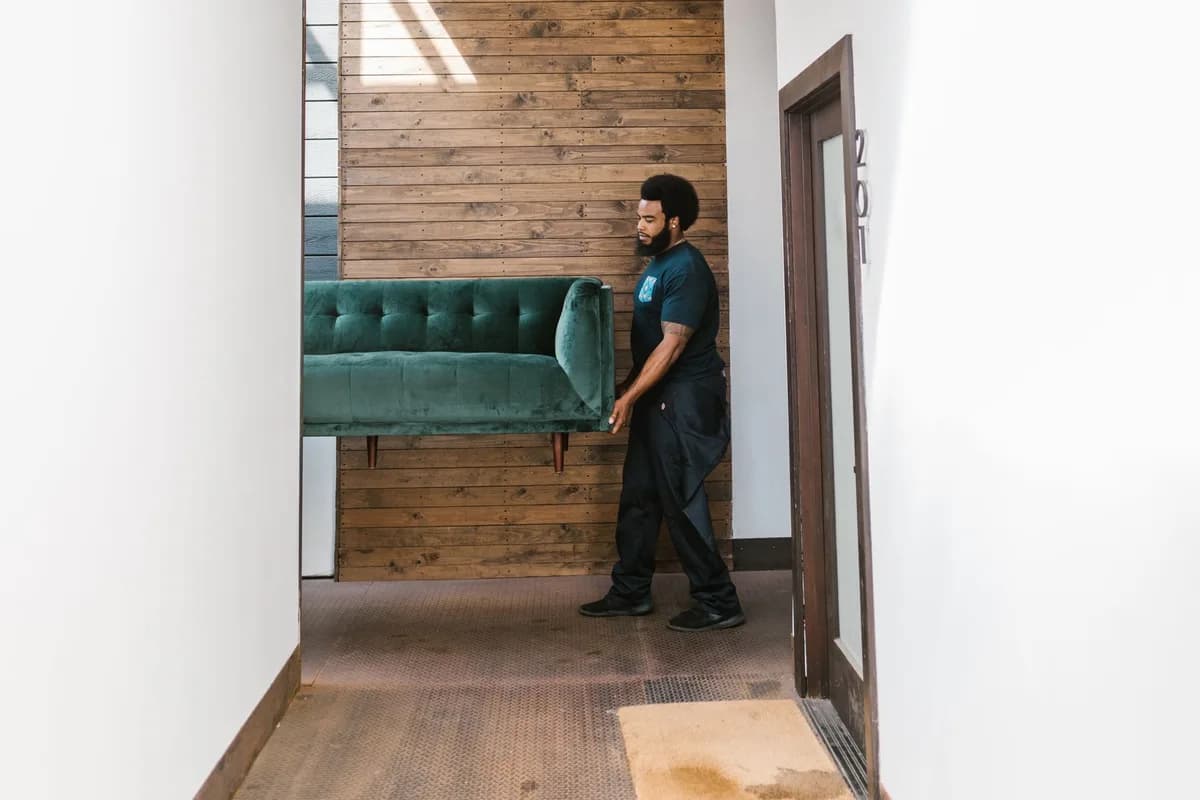
Furniture removal in Dubai is priced on two things: how much space your pieces take on the vehicle, and how much work it takes to get them out of the room. There is no fixed menu, and the second half is the part people underestimate. A wardrobe and a sofa of roughly the same size can be quoted quite differently, and the reason is almost never weight.
What you are actually paying for
Strip a furniture collection back and it has three costs behind it: the crew's time, the space the items occupy in the vehicle, and getting the load to a lawful disposal or reuse point afterwards. Everything on a quote traces back to one of those three.
Furniture sits awkwardly in that model because it is bulky without being heavy. A three-door wardrobe fills a serious share of a van for what it actually weighs. Volume rather than weight is what applies to furniture, which is why it is so often quoted per piece, and why the number moves with shape and access rather than with mass.
Per piece, or as part of a load
Two shapes of quote come up, and which suits you depends on how much is going.
- Per piece works when there are one to three identifiable items: a sofa, a bed, a wardrobe. You can see what each one costs and nothing is bundled.
- As part of a load works when a room or a whole flat is being cleared and counting individual pieces stops being sensible. The lot is assessed together against how much of a vehicle it fills.
If your job sits between the two, ask for both. A five-item clear-out is sometimes cheaper as a small load than as five separate pieces, and no company should mind being asked.
Dismantling is the biggest single variable
The one factor that reliably moves a furniture price is whether the piece has to come apart before it can leave. Dismantling is unglamorous, skilled time, and it is time spent inside your flat rather than on the road.
Flat-pack against solid
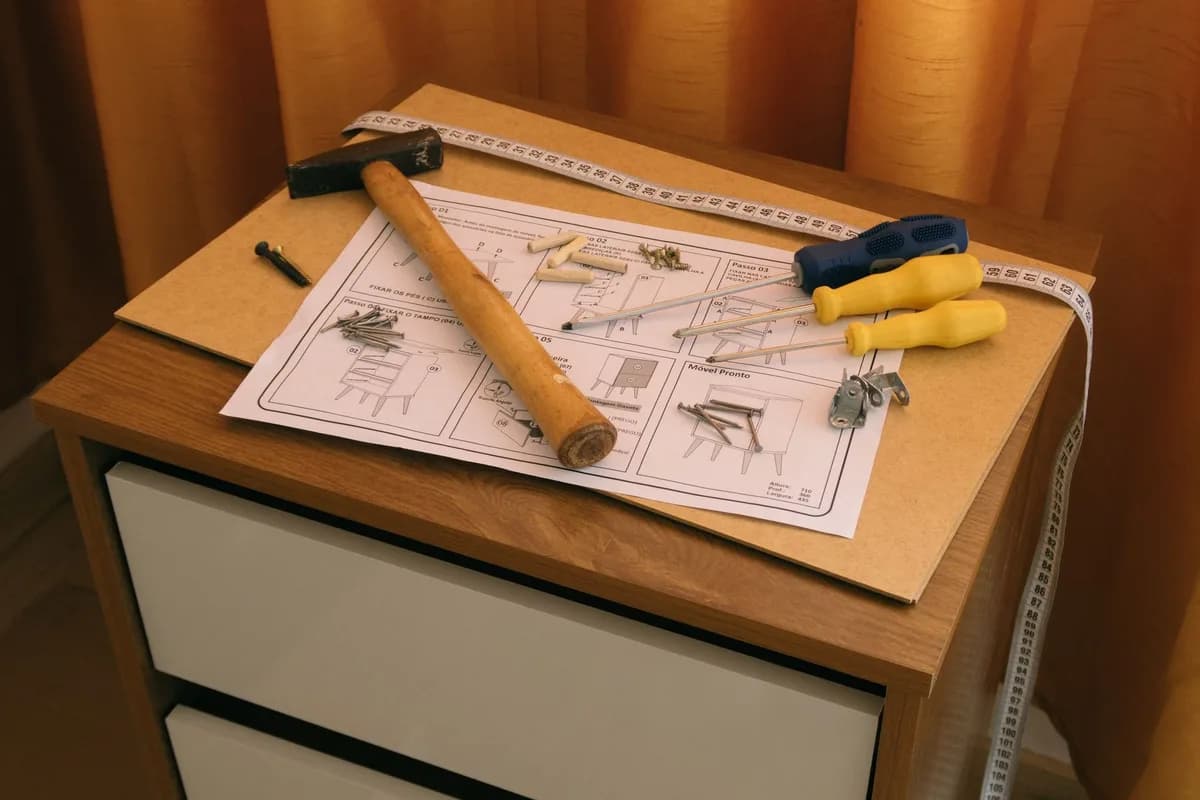
Flat-pack furniture comes apart quickly but rarely survives it, because the panels break up around the fittings. That is fine when the piece is going for disposal anyway. Solid wood is the opposite: slower to take apart, but it separates cleanly, which matters if the piece is going on for reuse rather than straight to disposal.
Freestanding against fitted
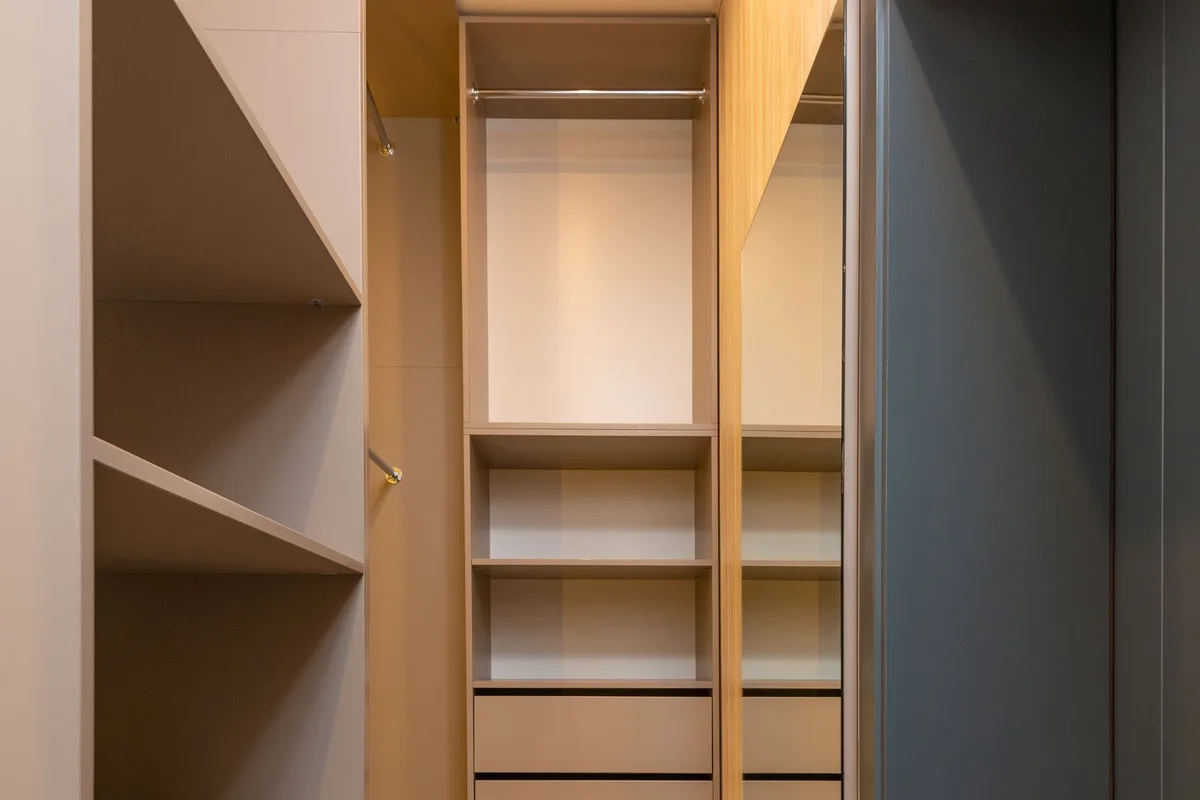
A freestanding wardrobe is a piece of furniture. A fitted one is closer to joinery: fixed to the wall, often built around the dimensions of the room, and taking it out is a different job with a different amount of work in it.
If a wardrobe, shelving run or storage unit is attached to the structure, say so when you ask for a price. It is the single detail most likely to change a quote after the crew has arrived, and nobody enjoys that conversation.
The route out of the room
After dismantling, the second variable is how far the pieces travel on foot and how many times. Access is measured in trips rather than in metres.
- The floor you are on, and whether there is a service lift or only stairs.
- Whether that lift is large enough for a two-seater sofa or a full-length wardrobe panel.
- Doorway and corridor widths, and the corners between the room and the exit.
- How far the vehicle can legitimately park from the entrance.
Two identical sofas in the same tower can be quoted differently because one sits on a floor served by a wide service lift and the other does not.
What each type of furniture usually means
- Sofas and corner units: bulky, awkward on corners, and corner units almost always split into sections.
- Wardrobes: the most volume for the least weight, and the most likely piece to need dismantling.
- Beds: the frame and the mattress count as two items, and the frame normally comes apart.
- Dining tables: legs off, which is quick, though a stone or glass top needs care and two people.
- Mattresses: light, unwieldy, and difficult to steer down a stairwell.
- Desks and office furniture: usually quick, unless a pedestal or return is bolted through.
- Outdoor furniture: often heavier than it looks once sand and water have collected in the bases.
- Glass and mirrored pieces: handled slowly, and the slow part is what you are paying for.
What matters less than people expect
Some of what people volunteer at quoting time barely registers.
- Age. A twenty-year-old wardrobe and a two-year-old one take the same work to remove.
- Brand. A collection is not a valuation, and nothing on the quote reflects what a piece originally cost.
- Cosmetic condition. Scratches and stains change nothing about the carry.
Condition matters in one direction only. A piece that is already broken, or one still sound enough to be reused, changes where it goes afterwards rather than what it takes to move it.
Getting a quote that holds
The gap between a quoted price and a final one is nearly always an access surprise. Closing that gap is straightforward.
- Photograph each piece from far enough back to show its real size.
- Photograph the route as well: the room door, the corridor, the lift, and the building entrance.
- Say what is fitted and what is freestanding.
- Say which floor you are on and whether the service lift can be booked.
- Mention anything already dismantled, and anything that cannot be.
A company given those five things can usually hold its number. One given a single photo of a sofa in the corner of a room is guessing, and a guess is generally revised upward at the door.
Honest ways to bring the cost down
- Combine pieces into one visit rather than booking twice. A second visit repeats the whole journey for a fraction of the load.
- Take apart what you can do safely and confidently, and keep the fittings with the piece.
- Move genuinely small items down yourself if that is realistic. Leave anything large alone.
- Be flexible on timing where you can, so the job fits an efficient route.
- Sell or donate whatever is still usable before you book, so it never joins the load at all.
What does not work is under-describing the job to get a lower number. The pieces still have to come out, and the figure corrects itself the moment the crew sees the room.
Furniture pricing reads as unpredictable mostly because two similar-looking jobs can contain very different amounts of work. Once you think of it as space on a vehicle plus the effort of reaching it, the pattern is clear: what a piece is made of matters less than how it comes apart and how it gets to the street. Describe the route as carefully as you describe the furniture, and the quote you are given is usually the one you pay.